
- Your cart is empty
- Continue shopping
Henna vs Hair Dye: Which Option Is Healthier for Your Hair?
-
 admin
- Posted on
- Categories:Blog
- 0 comments

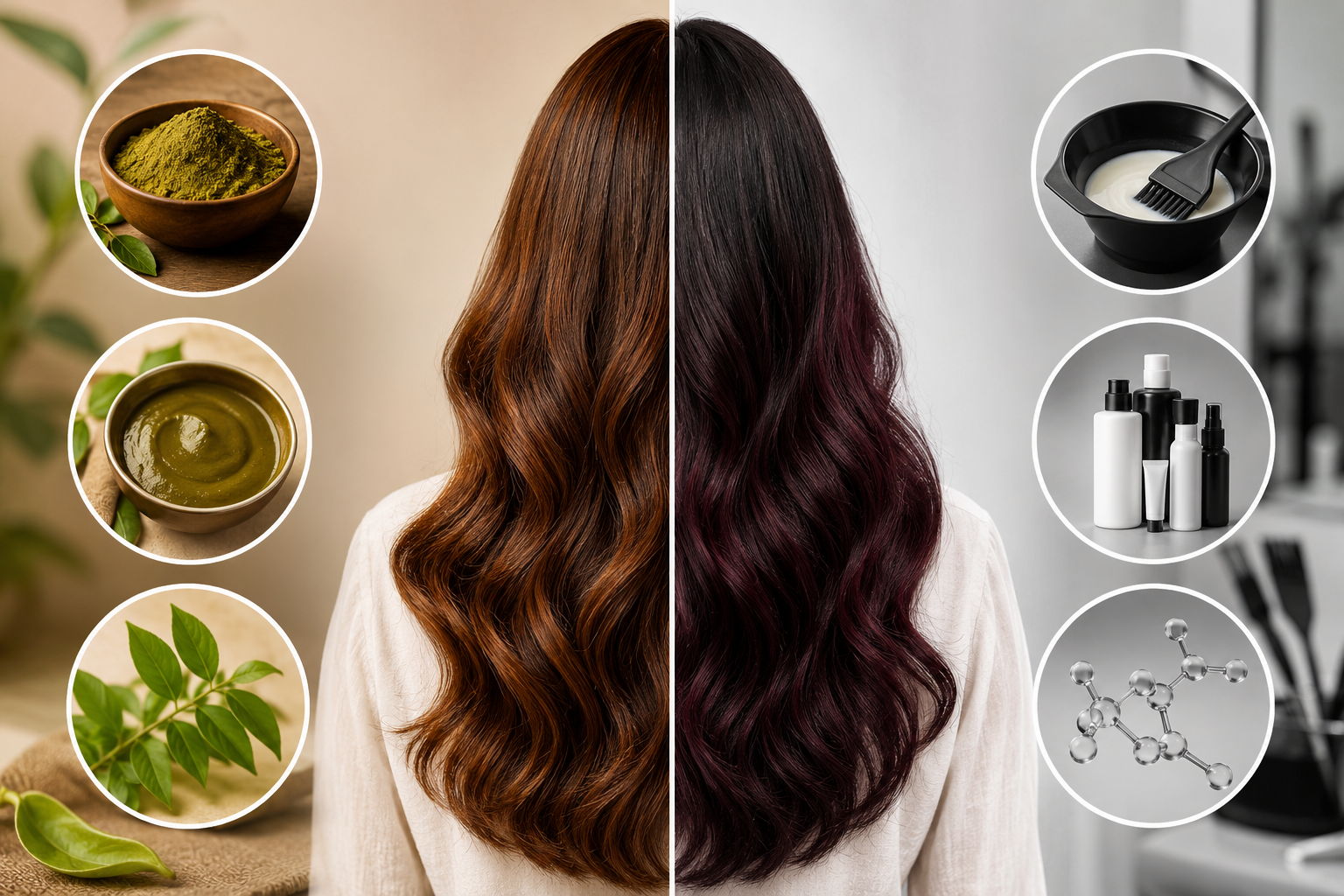
Hair coloring has become a regular part of many beauty routines, whether to cover grey hair, refresh a look, or experiment with a new style. While chemical hair dyes offer instant color in a wide variety of shades, many people are now looking for natural alternatives that align with healthier hair care practices. This growing interest has made henna vs hair dye a common comparison among people searching for the right option.
Natural henna has been used for centuries in traditional Indian beauty rituals to color and condition hair. Unlike chemical dyes that alter the hair’s internal structure, pure henna coats the hair with natural plant pigments while enhancing its appearance. At Natblush, this traditional approach continues through carefully crafted herbal hair care products designed for people who prefer plant-based beauty solutions.
If you’re unsure whether natural henna or chemical hair dye is the better choice, this guide explains the key differences to help you decide.
Henna vs Hair Dye at a Glance
Feature | Natural Henna | Chemical Hair Dye |
Hair Coloring | Natural reddish-brown shades | Wide range of colors |
Grey Hair Coverage | Yes | Yes |
Plant-Based | ✔ | ✘ |
Hair Conditioning | ✔ | Depends on formulation |
Color Variety | Limited | Extensive |
Hair Shine | Naturally enhances shine | Varies |
Understanding Chemical Hair Dye
Chemical hair dyes are designed to change the natural color of the hair by allowing color pigments to penetrate the hair shaft. Permanent dyes often contain ingredients such as ammonia or similar alkalizing agents and peroxide, helping the color last for several weeks.
Many people choose chemical hair dyes because they provide:
- Wide color selection
- Fast application
- Consistent results
- Complete grey hair coverage
While modern formulations have improved over the years, frequent coloring may require extra conditioning and maintenance to keep hair looking healthy.
What Makes Natural Henna Different?
Henna is made from the dried leaves of the Lawsonia inermis plant. When mixed with water, it releases a natural pigment that binds to the outer layer of the hair instead of changing its internal structure.
This creates rich, natural-looking shades while giving hair a smoother and shinier appearance.
At Natblush, henna is valued not only as a natural hair color but also as an important part of a complete herbal hair care routine. Choosing high-quality henna ensures better consistency, easier application, and more reliable results.
Henna vs Hair Dye: Key Differences
Hair Health
One of the biggest differences between henna and chemical hair dye is how each interacts with the hair.
Chemical dyes work by opening the hair cuticle to deposit color deep inside the strand. Repeated coloring without proper aftercare may leave hair feeling dry over time.
Henna works differently by coating each strand with natural pigments. Many users appreciate that it helps hair appear smoother, shinier, and fuller after regular use.
Grey Hair Coverage
Grey hair is one of the main reasons people color their hair.
Chemical dyes provide uniform coverage and allow users to match almost any hair shade.
Natural henna also covers grey hair, producing warm copper, auburn, or reddish-brown tones depending on the original hair color. Many people combine henna with herbal ingredients such as indigo to achieve darker shades naturally.
Scalp Care
People with sensitive scalps often prefer to know exactly what goes into their hair care products.
Pure henna is valued for its simple plant-based composition and has been used in traditional beauty routines for generations. Like any cosmetic product, performing a patch test before first use is always recommended.
Color Choices
Chemical hair dyes offer almost unlimited color options, including blonde, burgundy, ash brown, and fashion shades.
Natural henna is more limited because it produces shades within the reddish-brown family. However, many people prefer this authentic finish because it complements their natural hair color beautifully.
Why Many People Choose Natblush Henna?
The quality of henna plays a major role in the final results. Products containing unnecessary fillers or artificial additives may not deliver the same natural coloring experience as pure herbal henna.
Natblush Henna is inspired by traditional Indian hair care practices and created for those who prefer a plant-based approach to hair coloring. It offers a simple way to embrace natural beauty while supporting healthy-looking hair.
Many customers choose Natblush because it offers:
- High-quality herbal ingredients
- Traditional hair coloring experience
- Smooth and easy application
- Natural-looking color
- A trusted herbal hair care approach
Whether covering grey hair or refreshing natural tones, Natblush Henna fits easily into a regular hair care routine.
Tips for Getting the Best Results with Henna
Using henna correctly helps achieve even color and a better overall experience.
Follow these simple tips:
- Choose pure, high-quality henna.
- Perform a patch test before first use.
- Mix according to the instructions.
- Apply evenly from roots to ends.
- Allow enough time for the color to develop.
- Rinse thoroughly with water.
- Use gentle hair care products after coloring.
Regular application every four to six weeks helps maintain fresh-looking color as new hair grows.
Complete Your Herbal Hair Care Routine
Healthy-looking hair depends on more than just hair color. A complete routine includes gentle cleansing and regular nourishment.
Along with Natblush Henna, many people include other herbal products in their routine, such as:
Using complementary herbal products can help create a simple routine inspired by traditional Indian beauty practices.
Which Option Is Right for You?
Choosing between henna and chemical hair dye depends on your personal preferences and hair goals.
Natural henna may be the better choice if you:
- Prefer plant-based beauty products
- Want natural-looking hair color
- Appreciate traditional herbal hair care
- Like warm, earthy hair tones
Chemical hair dye may be more suitable if you:
- Want blonde or fashion colors
- Frequently change hair color
- Need exact shade matching
- Prefer dramatic color transformations
Neither option is universally better—the right choice depends on the results you want to achieve.
Final Thoughts
When comparing henna vs hair dye, both options have unique advantages. Chemical hair dyes provide a wide range of shades and quick color changes, while natural henna offers a traditional approach that combines hair coloring with herbal hair care.
For those looking to embrace a more natural beauty routine, Natblush Henna offers a trusted solution inspired by generations of herbal hair care traditions. Combined with the complete range of Natblush herbal hair products, it helps create a routine focused on naturally beautiful, healthy-looking hair.
Frequently Asked Questions
Is henna better than chemical hair dye?
Henna and chemical hair dye serve different purposes. Henna offers natural coloring along with traditional herbal hair care benefits, while chemical dyes provide more color choices and faster transformations.
Does Natblush Henna cover grey hair?
Yes. Natblush Henna naturally colors grey hair into warm reddish-brown tones. The final shade depends on the original hair color and application process.
Can henna damage hair?
Pure henna is generally known for coating and conditioning the hair rather than weakening it. Choosing high-quality henna is recommended.
How long does henna color last?
Most people enjoy henna color for four to six weeks, depending on hair type, washing habits, and maintenance.
Can I use chemical hair dye after henna?
Yes, but it is advisable to perform a strand test and allow the henna color to settle before applying chemical dye.
Why choose Natblush Henna?
Natblush Henna combines traditional herbal ingredients with quality processing to offer a natural hair coloring experience for people seeking healthier-looking hair.
Tags:
