
- Your cart is empty
- Continue shopping
Oily Scalp or Dry Scalp? Here’s the Complete Guide to Healthier Hair
-
admin
- Posted on
- Categories:Blog
- 0 comments
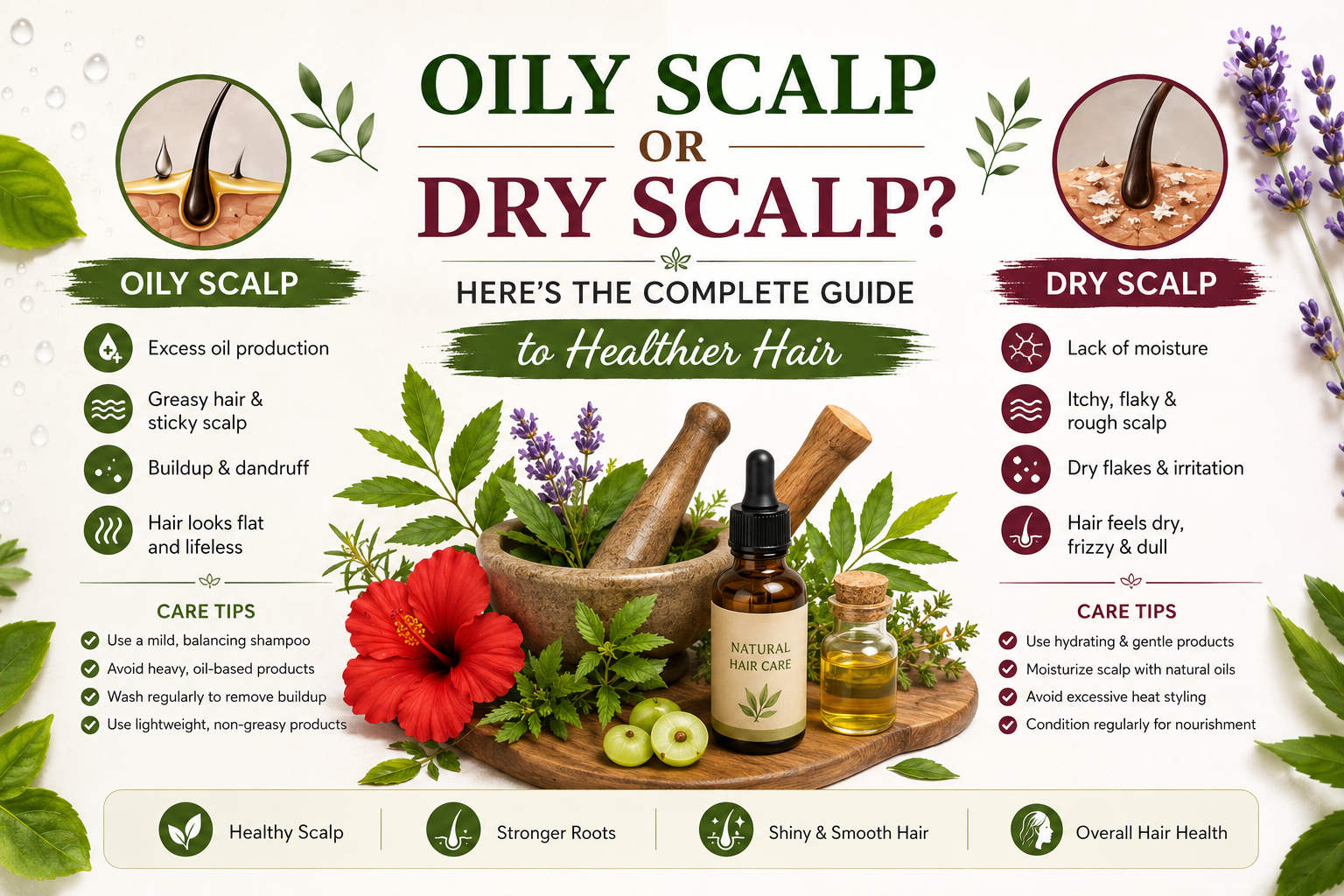
Healthy hair starts with understanding scalp health. Many common hair concerns like hair fall, dandruff, itchiness, greasy hair, and dryness are often linked to scalp imbalance. However, many people struggle to identify whether they have an oily scalp or a dry scalp, which leads to using the wrong products and routines.
Understanding the difference between scalp types helps build a better hair care routine for maintaining healthier, smoother, and more manageable hair. Today, brands like Natblush focus on gentle and balanced hair care solutions that support scalp health naturally without relying heavily on harsh chemicals.
A proper scalp-focused routine can improve overall hair texture, reduce common scalp issues, and support healthier-looking hair over time.
What is an Oily Scalp?
An oily scalp occurs when the scalp produces excess sebum (natural oil). While natural oils help protect the scalp, excessive oil production can make hair greasy, heavy, and more prone to buildup.
Common Signs of Oily Scalp:
- Hair becomes greasy quickly
- Sticky or oily roots
- Flat-looking hair
- Frequent scalp buildup
- Increased dandruff due to oil accumulation
What is a Dry Scalp?
A dry scalp happens when the scalp lacks sufficient moisture. This can cause itchiness, flaking, roughness, and irritation.
Common Signs of Dry Scalp:
- Itchy scalp
- Small dry flakes
- Tight or rough scalp feeling
- Dry and frizzy hair
- Dull-looking hair texture
Oily Scalp vs Dry Scalp – Key Difference
Oily Scalp | Dry Scalp |
Excess oil production | Lack of moisture |
Hair feels greasy quickly | Hair feels rough and dry |
Heavy buildup on scalp | Itchy and flaky scalp |
Hair appears flat | Hair appears frizzy |
Requires balancing cleansing | Requires hydration and nourishment |
Causes of Oily Scalp
Several lifestyle and environmental factors can trigger excess oil production.
Common Causes:
- Overwashing hair
- Humid weather conditions
- Hormonal imbalance
- Heavy product buildup
- Using harsh shampoos
Using overly strong cleansing products may actually increase oil production by disturbing scalp balance.
Causes of Dry Scalp
Dry scalp can develop due to moisture loss and external damage.
Common Causes:
- Cold weather and low humidity
- Excessive heat styling
- Harsh shampoos and chemicals
- Lack of hydration
- Overwashing hair
Maintaining hydration and gentle scalp care is important for improving scalp comfort.
Best Hair Care Routine for Oily Scalp
Managing oily scalp requires balancing oil production without over-drying the scalp.
Recommended Routine:
- Wash hair using a mild cleanser
- Avoid heavy oil-based products
- Keep scalp clean from buildup
- Avoid touching hair frequently
- Use lightweight hair care products
Helpful Tip:
Lightweight products from Natblush can support scalp balance while maintaining softness and manageability naturally.
Best Hair Care Routine for Dry Scalp
Dry scalp requires hydration, nourishment, and gentle care methods.
Recommended Routine:
- Use moisturizing and gentle hair products
- Avoid very hot water while washing
- Apply lightweight nourishing oils when needed
- Protect hair from excessive heat styling
- Use conditioning products regularly
Hydrating routines help improve scalp comfort and reduce dryness over time.
Common Mistakes That Make Scalp Problems Worse
Many daily habits unknowingly damage scalp health.
Avoid These Mistakes:
- Using very harsh shampoos
- Overwashing hair frequently
- Applying excessive heat
- Skipping conditioner or serum
- Using too many styling products
- Ignoring scalp buildup
A balanced and consistent hair care routine is essential for maintaining scalp health naturally.
Simple Weekly Hair Care Routine for Healthier Hair
Following a simple routine helps improve both scalp condition and hair texture.
Step 1: Gentle Cleansing
Use mild hair cleansers to remove dirt, sweat, and buildup without stripping natural moisture.
Step 2: Conditioning
Condition the mid-lengths and ends to maintain softness and reduce dryness.
Step 3: Hair Serum Protection
Use lightweight serum to reduce frizz and protect hair from environmental damage.
Step 4: Limit Heat Styling
Reduce excessive heat exposure to maintain scalp and hair health.
Step 5: Maintain Proper Hydration
Drink enough water and maintain a balanced diet to support healthier scalp condition.
How to Choose the Right Products for Your Scalp Type?
Choosing products based on scalp condition is important for long-term results.
For Oily Scalp:
- Lightweight formulations
- Mild cleansers
- Non-greasy hair products
For Dry Scalp:
- Hydrating conditioners
- Moisture-supporting products
- Gentle scalp care solutions
Products available through Natblush support balanced routines designed for smoother, healthier-looking hair naturally.
Natblush – Supporting Balanced Hair Care Naturally
Natblush focuses on gentle and practical hair care solutions designed to support healthier scalp and hair conditions naturally. The brand emphasizes balanced routines and clean formulations that help maintain softness, smoothness, hydration, and manageability without relying heavily on harsh ingredients.
Experience & Quality-Focused Hair Care Approach
The scalp care methods discussed in this blog align with the approach followed by Natblush, which focuses on:
- Gentle daily hair care routines
- Lightweight and scalp-friendly formulations
- Supporting hydration and scalp balance
- Long-term hair nourishment support
- Maintaining smoother and healthier-looking hair naturally
By combining practical routines with carefully selected formulations, Natblush promotes a balanced approach toward maintaining healthy scalp conditions and manageable hair naturally.
FAQs
How do I know if I have an oily scalp or dry scalp?
If hair becomes greasy quickly and feels heavy, it is likely an oily scalp. If the scalp feels itchy, flaky, or tight, it is more likely a dry scalp.
Can oily scalp cause hair fall?
Excess oil buildup and poor scalp hygiene may weaken scalp condition over time and contribute to hair issues.
Is dry scalp the same as dandruff?
No. Dry scalp is caused by lack of moisture, while dandruff is often linked to oil buildup and scalp imbalance.
How often should oily scalp hair be washed?
Most oily scalp types benefit from washing hair 2–3 times a week using gentle cleansers.
What products are best for dry scalp?
Hydrating and gentle hair care products help support moisture balance and improve scalp comfort.
Tags:
